Client work / University of Dubai
UD Students
A prototype mobile app for University of Dubai students that puts their ID card on their phone, alongside a campus map, events, careers and everyday services. A companion reader mode lets security staff check a card by tapping or scanning it.
The phone acts as the ID card itself: hold it near a reader and the card is verified over NFC.
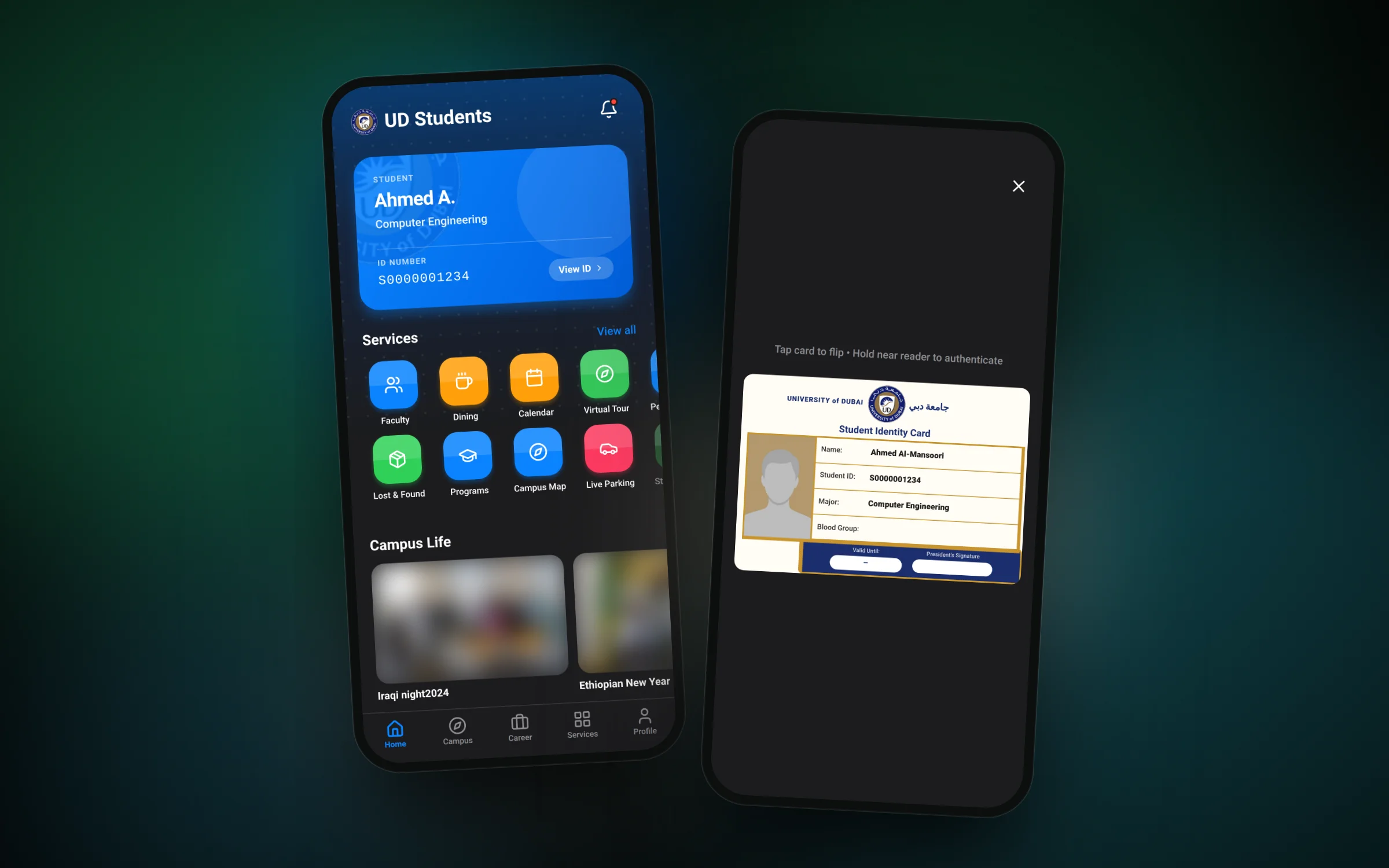
01 / 03Home puts the student card, services and campus life on one screen
Overview
Students carry a plastic ID card for getting into buildings, borrowing books and proving who they are, and they check several different websites for events, jobs and campus information. This prototype brings those into one app.
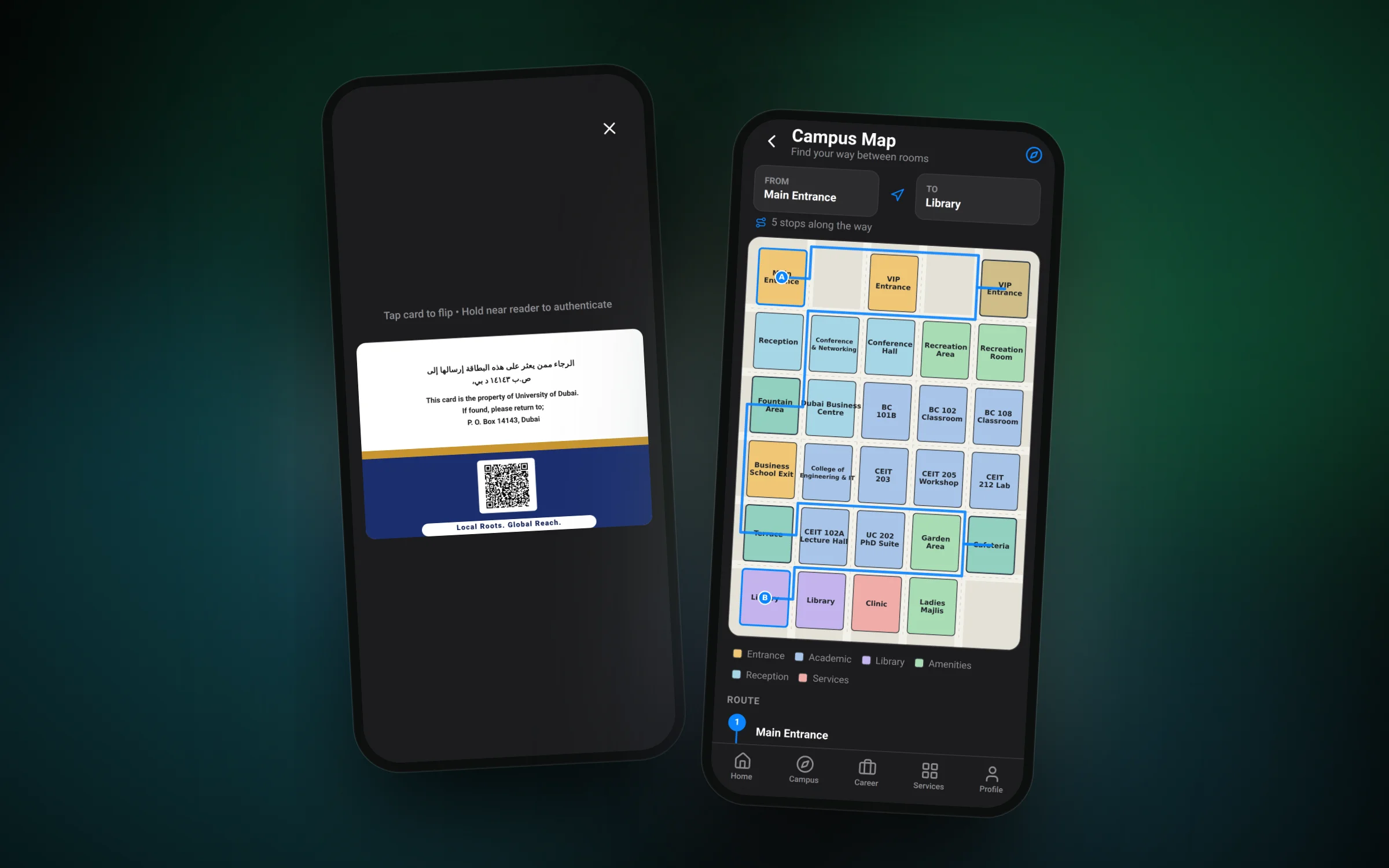
The centrepiece is a digital ID card. On Android the phone emulates an NFC card, so holding it near a reader sends the student's details for verification. The back of the card carries a QR code with the same data for readers without NFC. A separate reader mode shows security staff whether a card is valid and keeps a local log of checks.
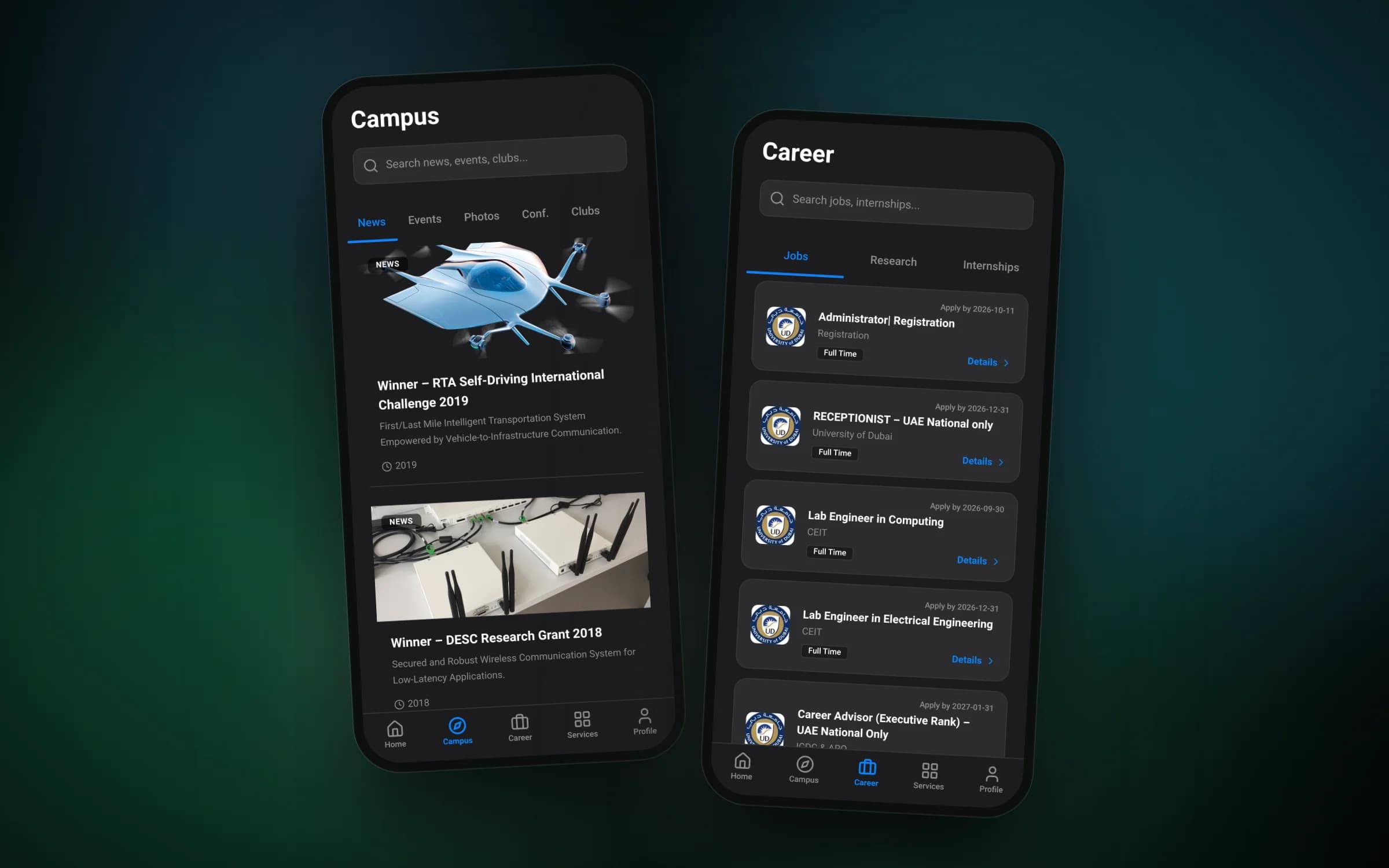
Around the card, the app offers a campus map with room-to-room directions, a feed of news, events and photos, job and internship listings, lost and found, shuttle times and event reminders. Binyam designed and built the app.
Features
- Show a digital student ID and flip it to reveal a QR code
- Tap the phone on an NFC reader to present the ID, with valid and denied cards handled differently
- Switch to reader mode to verify other cards and review a history of checks
- Get step-by-step directions between rooms on a campus floor plan
- Browse campus news, events, photos and clubs, and set reminders for upcoming events
- Search jobs, research roles and internships, and report or find lost items
Challenges
- Android lets only one app answer a given NFC card ID at a time. A small native module claims priority while the ID screen is open and releases it when the student leaves, so the right app responds at the reader.
- The NFC broadcast and the QR code needed to be read the same way. Both carry one compact payload with the student's details and a validity flag, so a reader can parse either one identically.
- Screens pull from several sources that can be slow or offline. Data is fetched and cached with TanStack Query and kept on the device, so the app opens with the last known content instead of empty lists.