Education
Soroban for Kids
Children aged about 5 to 10 learn to read and build numbers on a soroban, then add and take away, through short lessons and games. It shows first, lets the child copy, then plays, and a wrong answer never ends a session.

 Source code
10 lessons and 16 activity types, with spoken help in English and Amharic, and no backend or account needed.
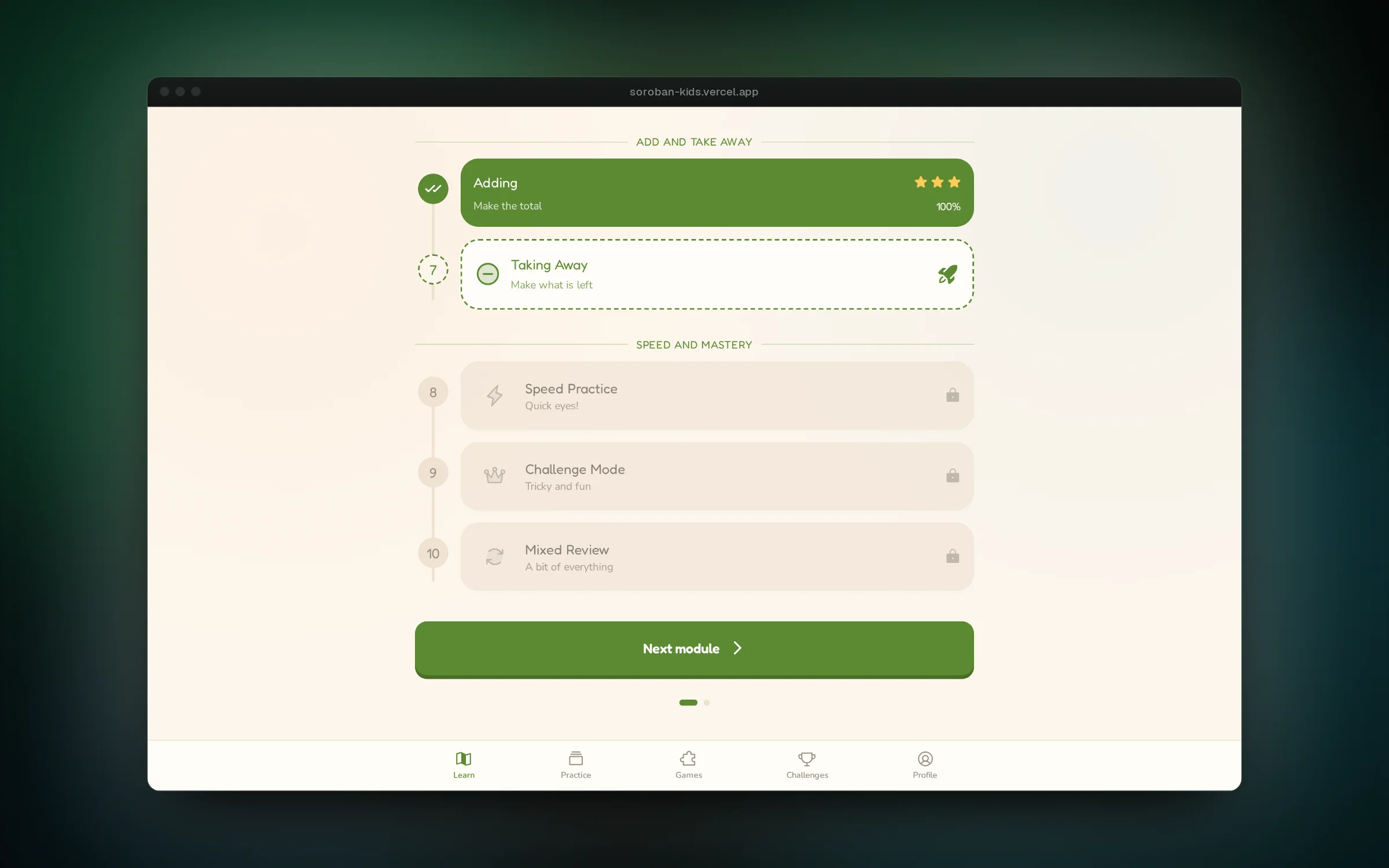
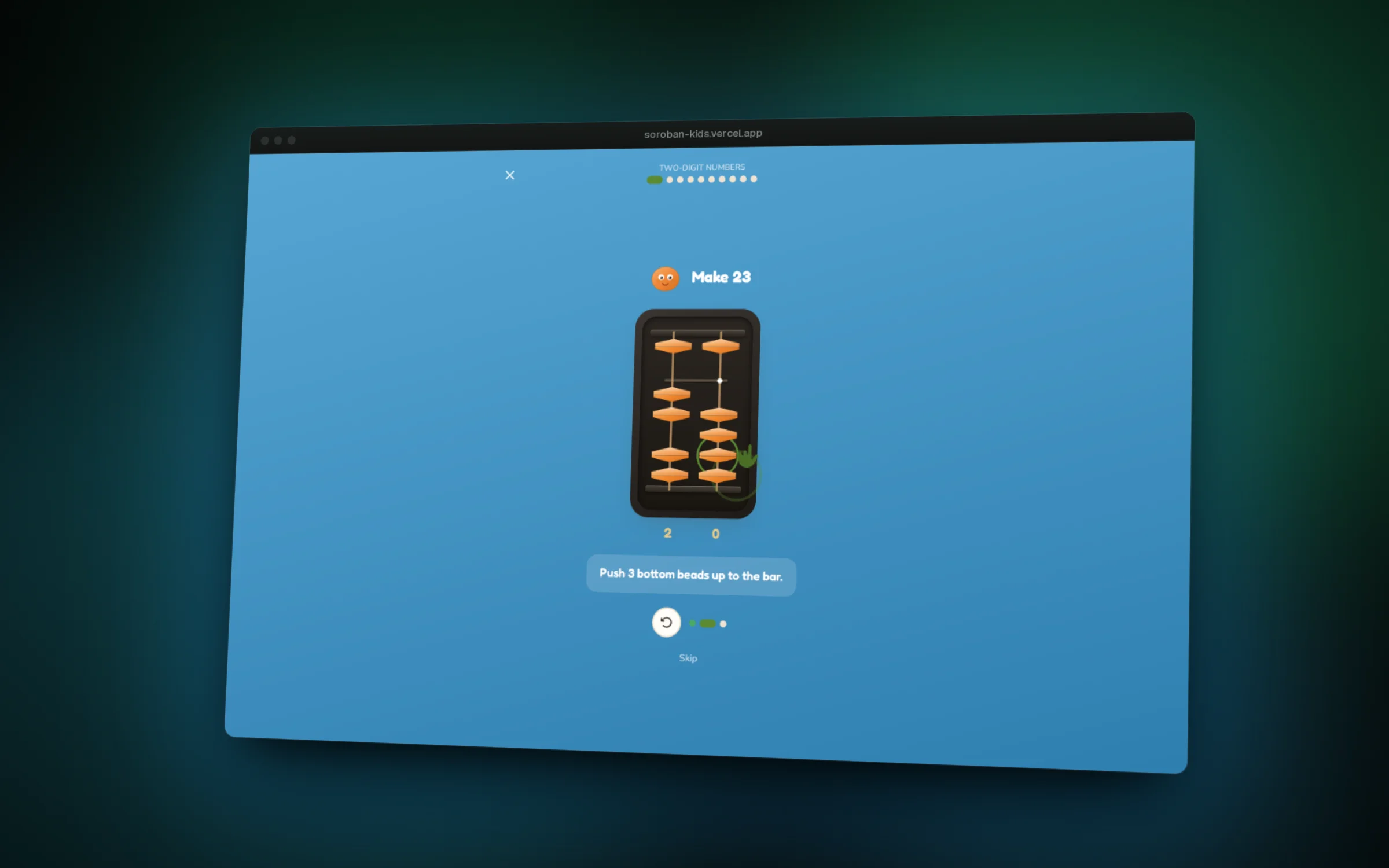
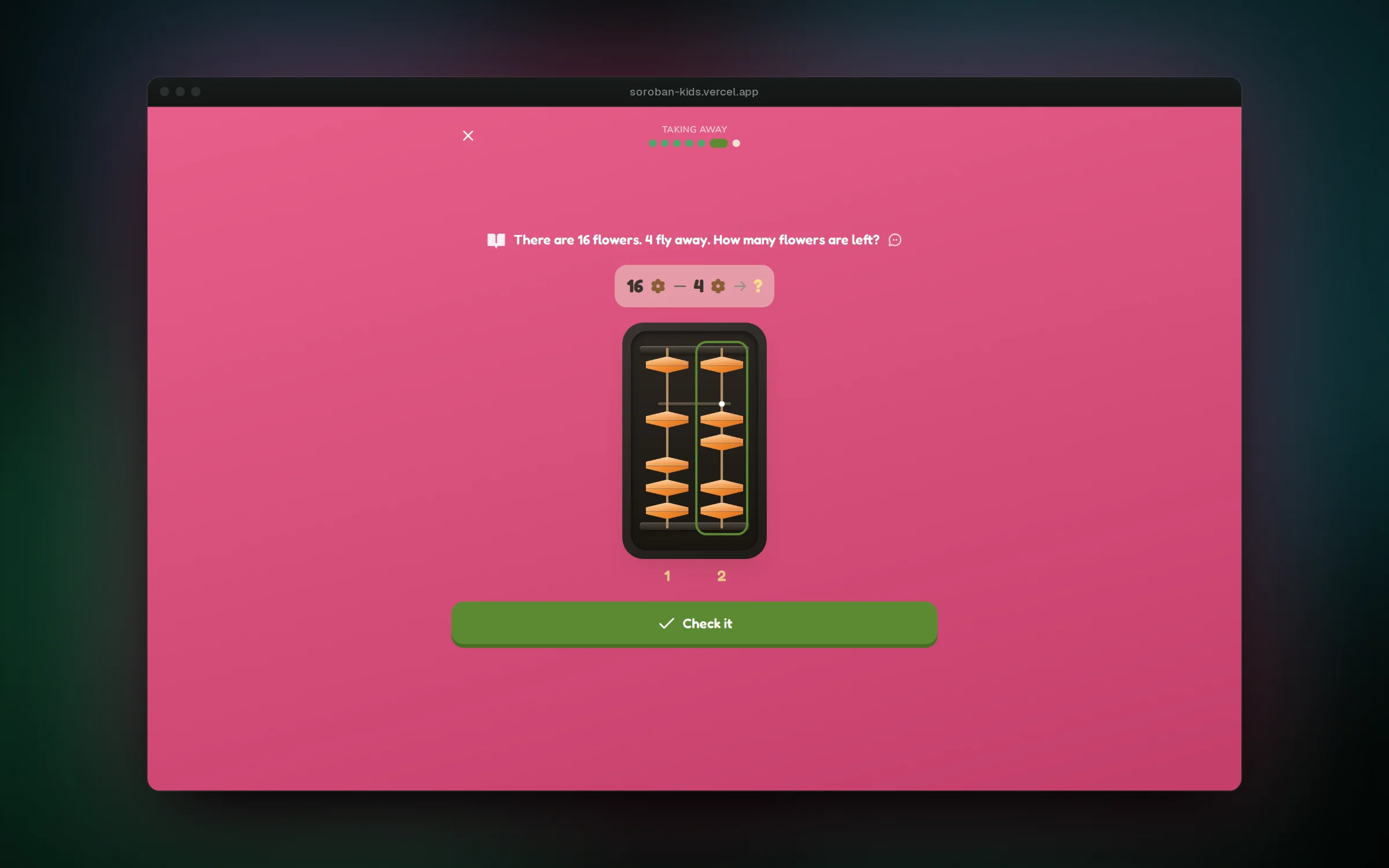
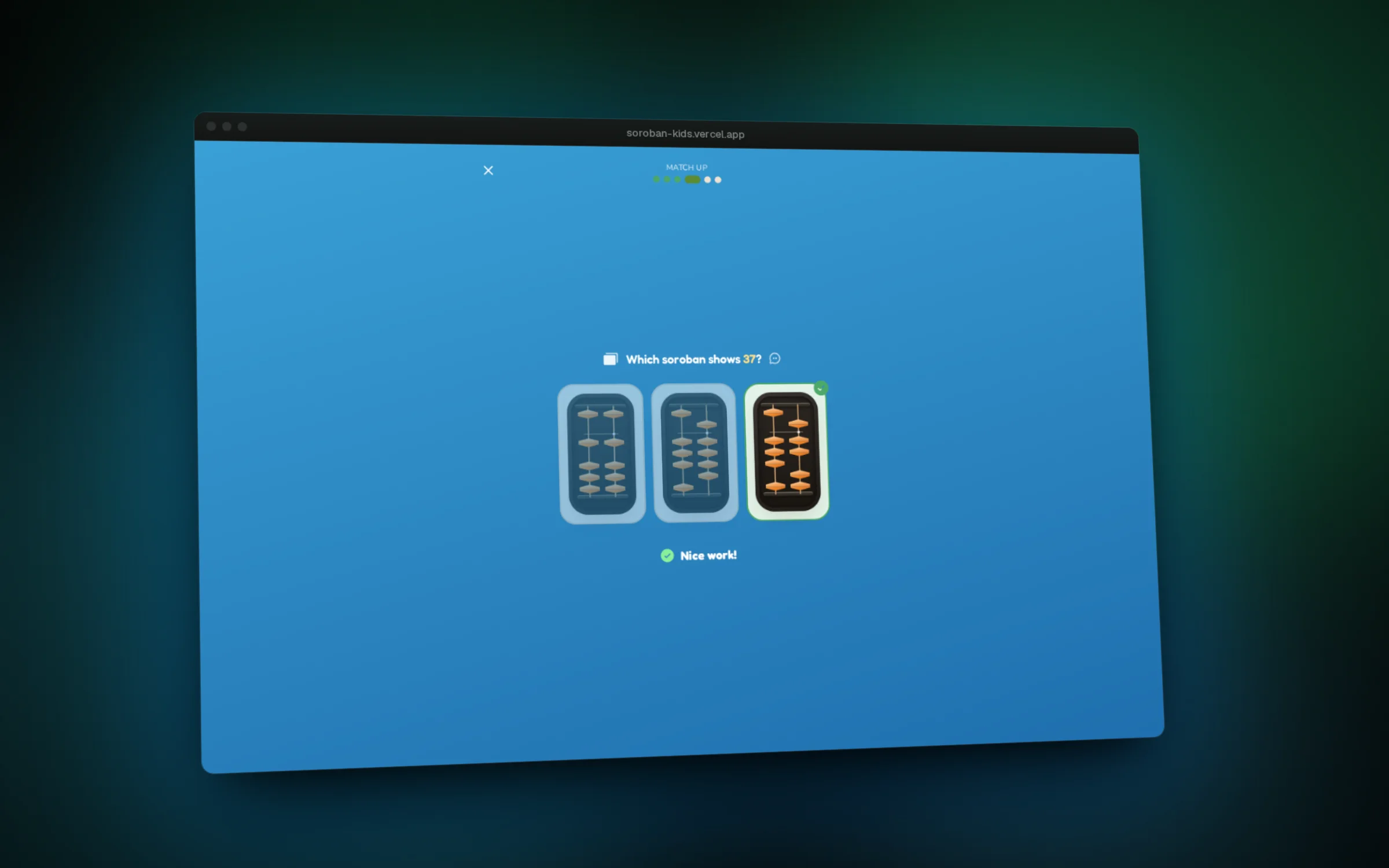
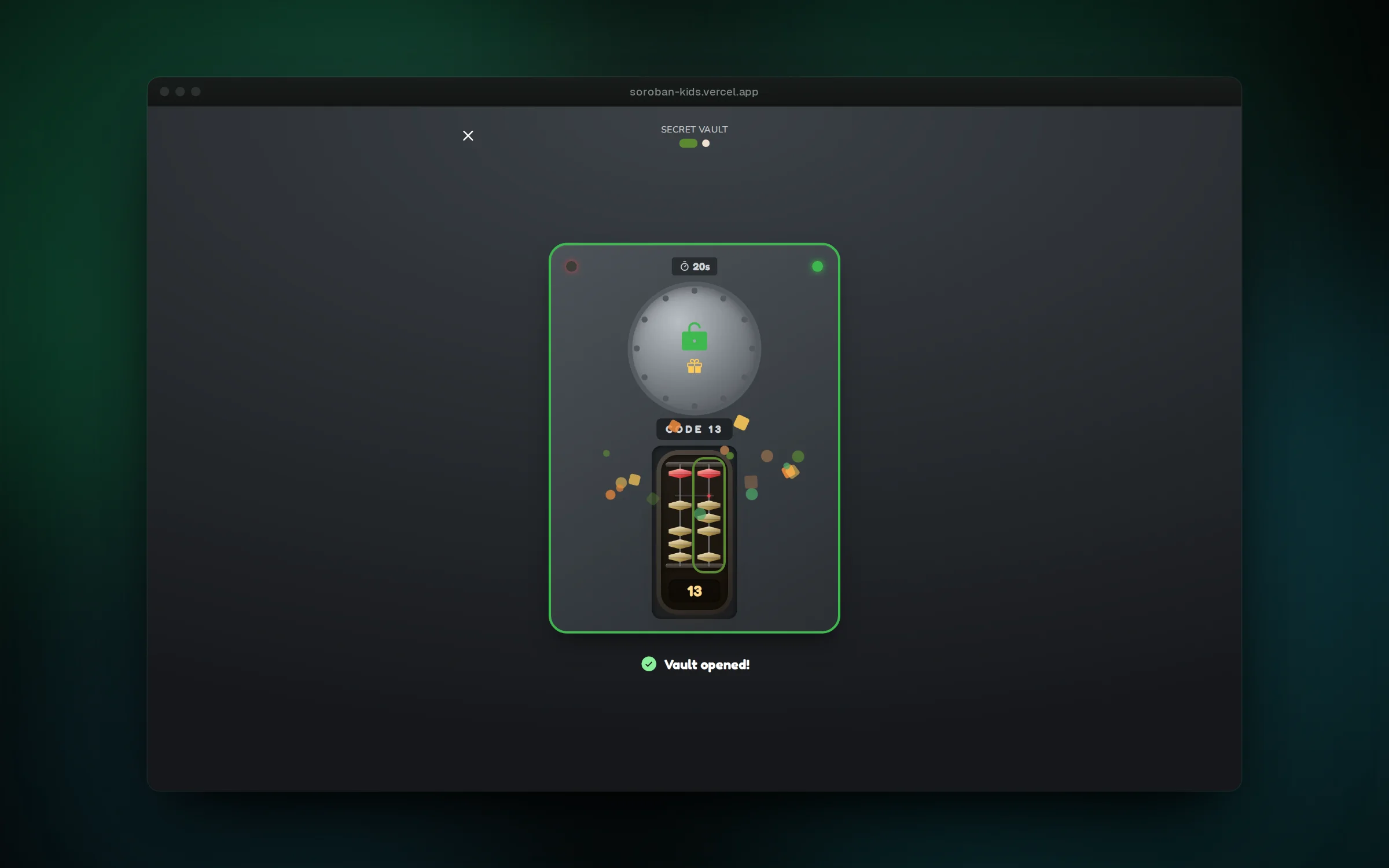
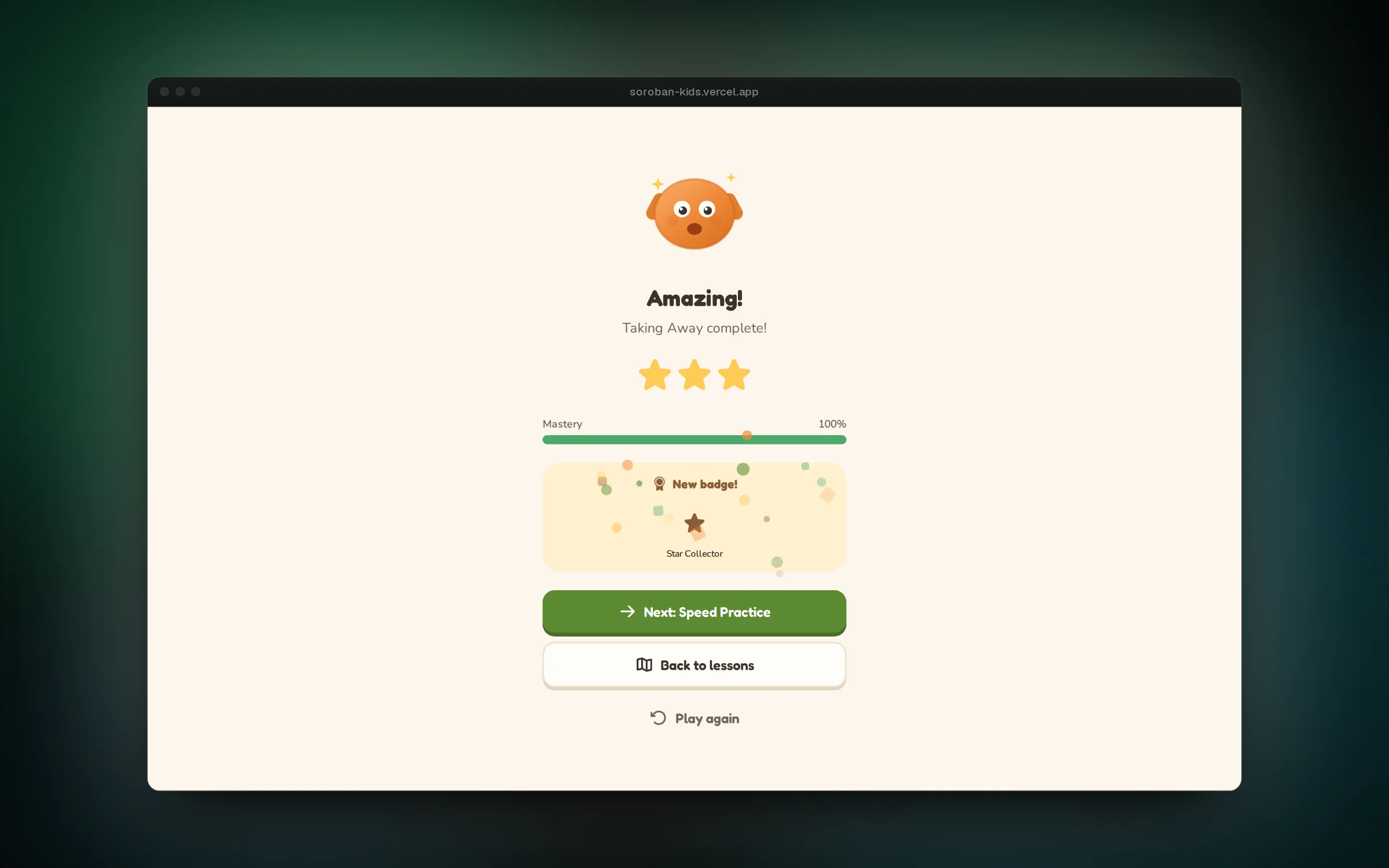
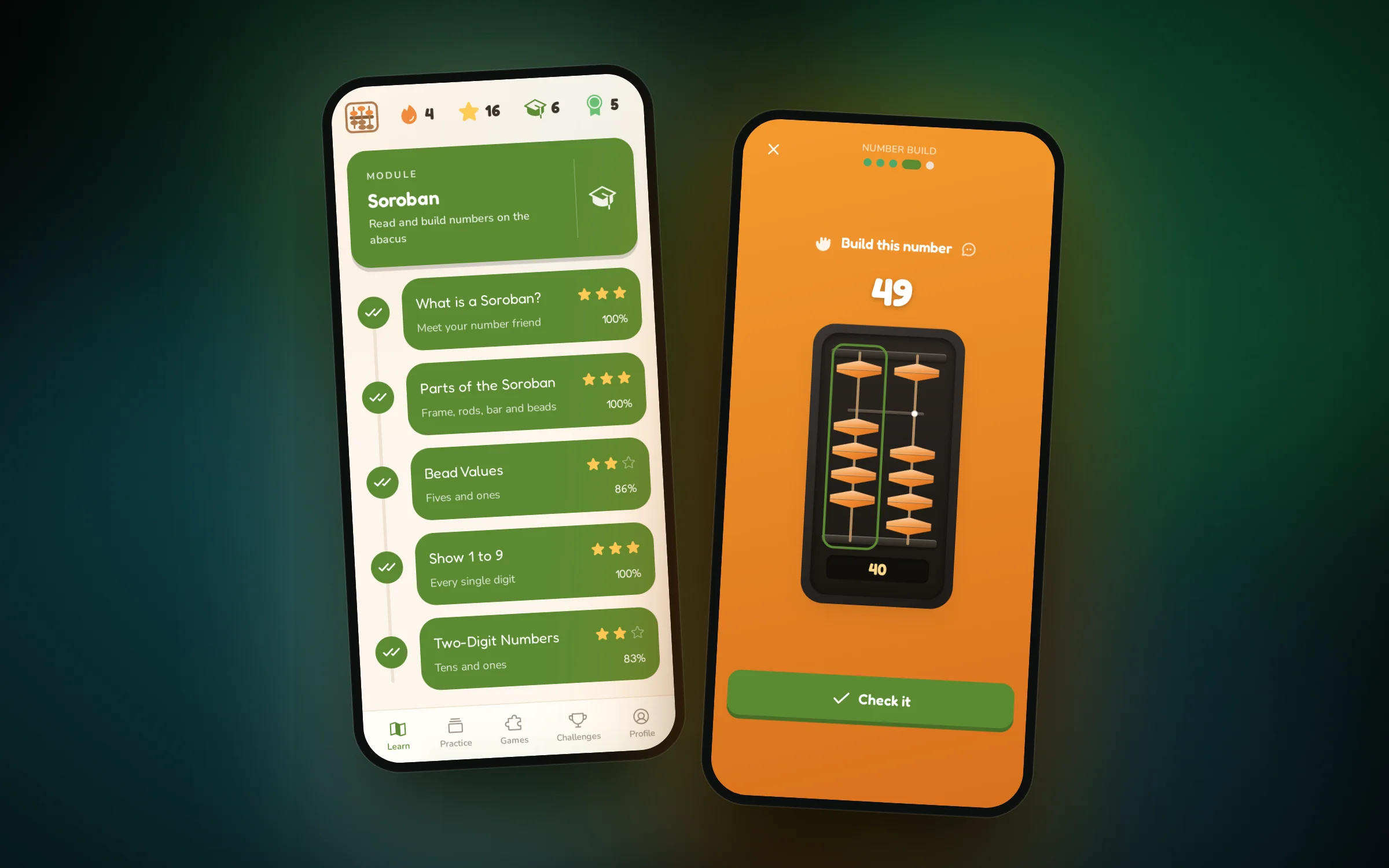
01 / 08Ten lessons that unlock in order, with stars and mastery
Overview
A soroban is a simple abacus with one bead worth 5 and four beads worth 1 on each rod. It is a lovely way for young children to see what numbers mean, but most apps drop a child straight into a quiz. Soroban for Kids teaches first: an animated demo with a pointing hand shows each move, the child copies it with gentle guidance, and only then do the games begin.
The course runs from "What is a soroban?" through single digits, two-digit numbers, adding, taking away, speed practice and a mixed review. Each lesson mixes different kinds of activities, so a child reads beads, builds numbers, remembers what changed and solves little story problems in the same sitting. Parents and teachers can see stars, mastery and streaks for each lesson.
Everything runs in the browser. Progress is saved on the device, music is generated live with Web Audio, and narration uses pre-recorded voice clips, so it works without an account or a server.
Features
- Follow a guided demo, then copy it on a real-looking soroban by tapping, dragging or using the keyboard
- Play 16 activity types, from Match Up and story problems to a timed Secret Vault that opens when the right code is set
- Hear every instruction read aloud by a choice of English or Amharic narrators, with separate switches for narration, sound effects and music
- Earn stars, badges and daily streaks, and unlock the next lesson when one is finished
- Switch on dark mode, pick a colour theme, or calm the animations with a reduced motion setting
- Practise freely in the Games tab or a free explore mode without affecting lesson progress
Challenges
- Making the abacus usable without a mouse or sight. Each rod is an ARIA spinbutton that takes arrow keys or a typed digit, the whole soroban announces its value, and a live region reads out changes for screen readers.
- Building narration that sounds warm and still covers every number. Short Edge TTS clips for phrases and numbers are generated ahead of time and stitched together at runtime, with the browser's own voice as a fallback when a clip is missing.
- Keeping mistakes gentle. Wrong answers show the next correct move with a glowing bead and a pointing hand instead of failing the session, and the pure soroban logic behind these hints is covered by unit tests.
- Keeping the lessons varied without hand-writing every screen. Lessons are plain data that combine teach cards and activity steps, and each activity generates its own numbers from a seed, so a new lesson or game type slots into the map without new UI code.