Developer tools
Prompt Privacy Shield
It watches what you paste into ChatGPT, Gemini and Claude, finds API keys, tokens, database URLs and personal details, and locks the send button until you redact them or decide to send anyway. Everything runs in the browser; the extension has no backend and makes no network calls.

 Source code
The send button and the Enter key are both blocked while a secret is on screen, so a careless paste cannot become a leaked key.
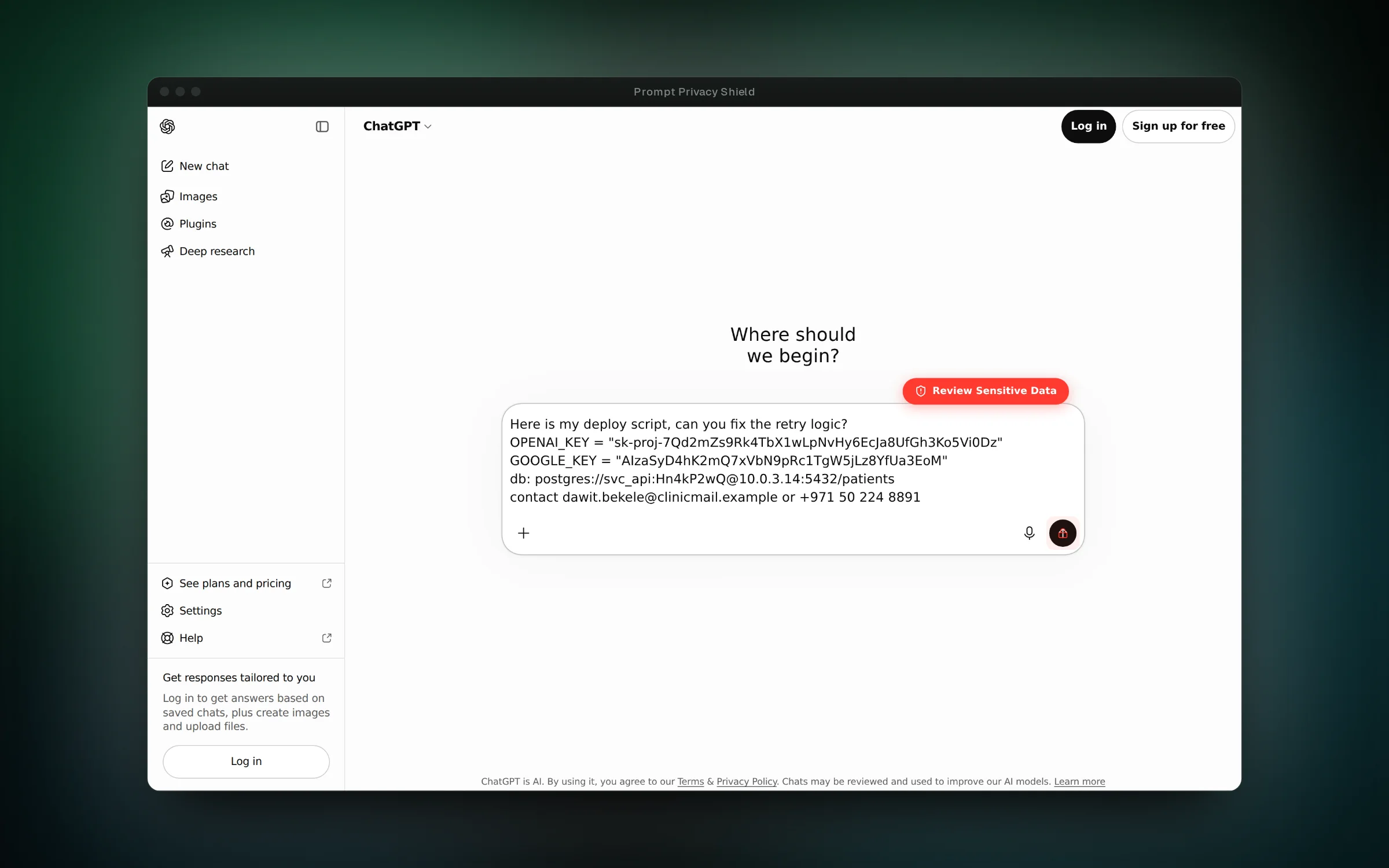
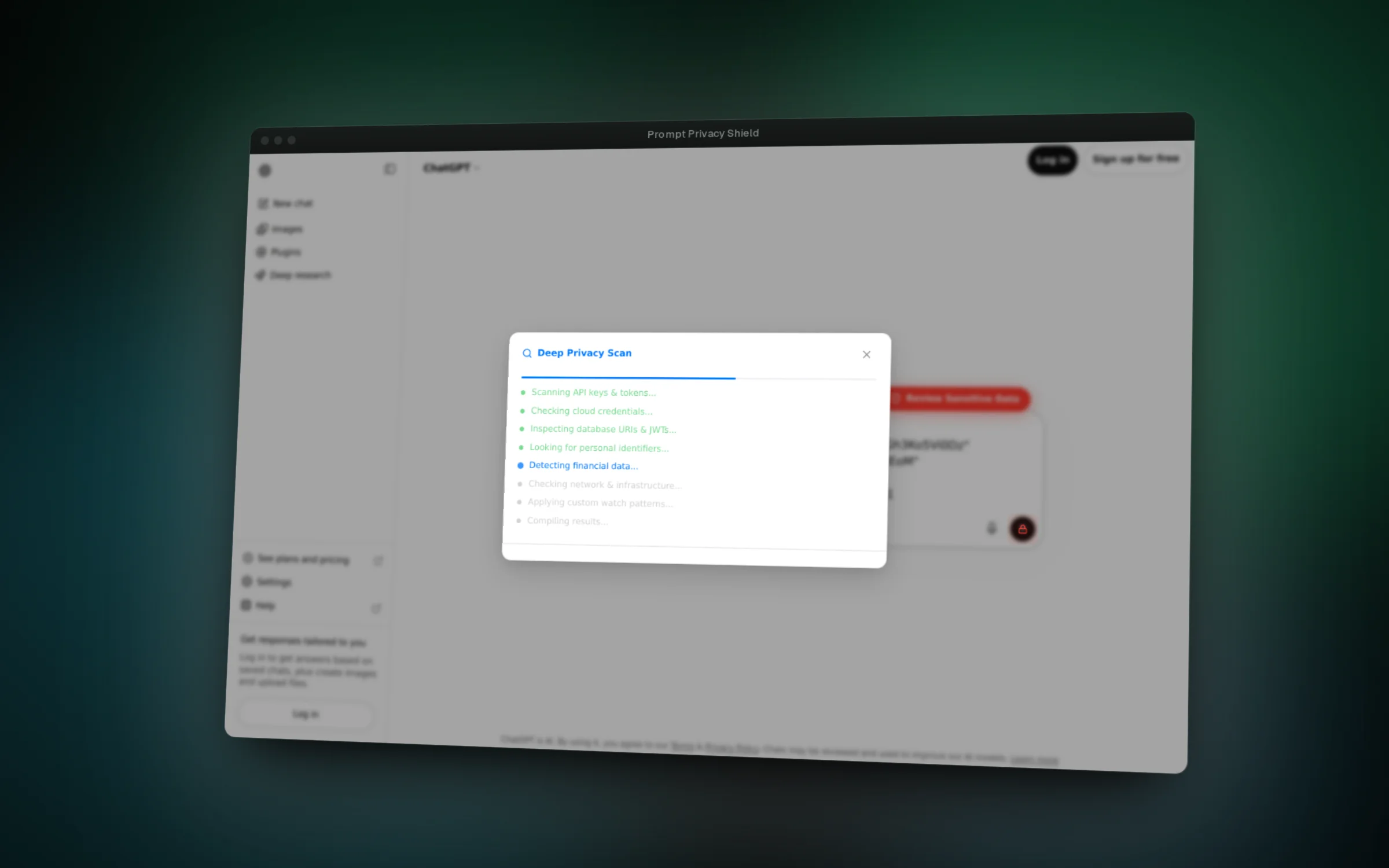
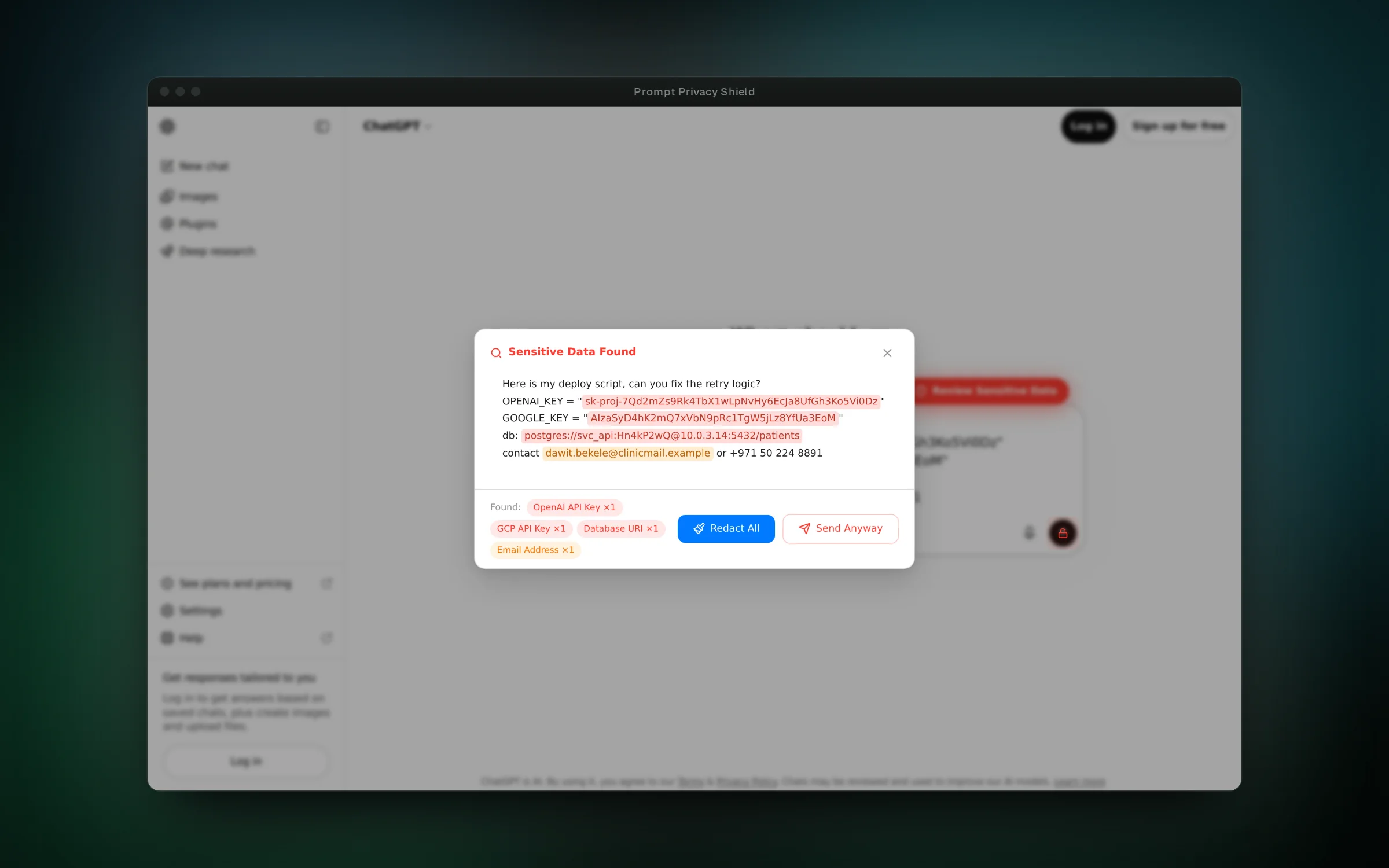
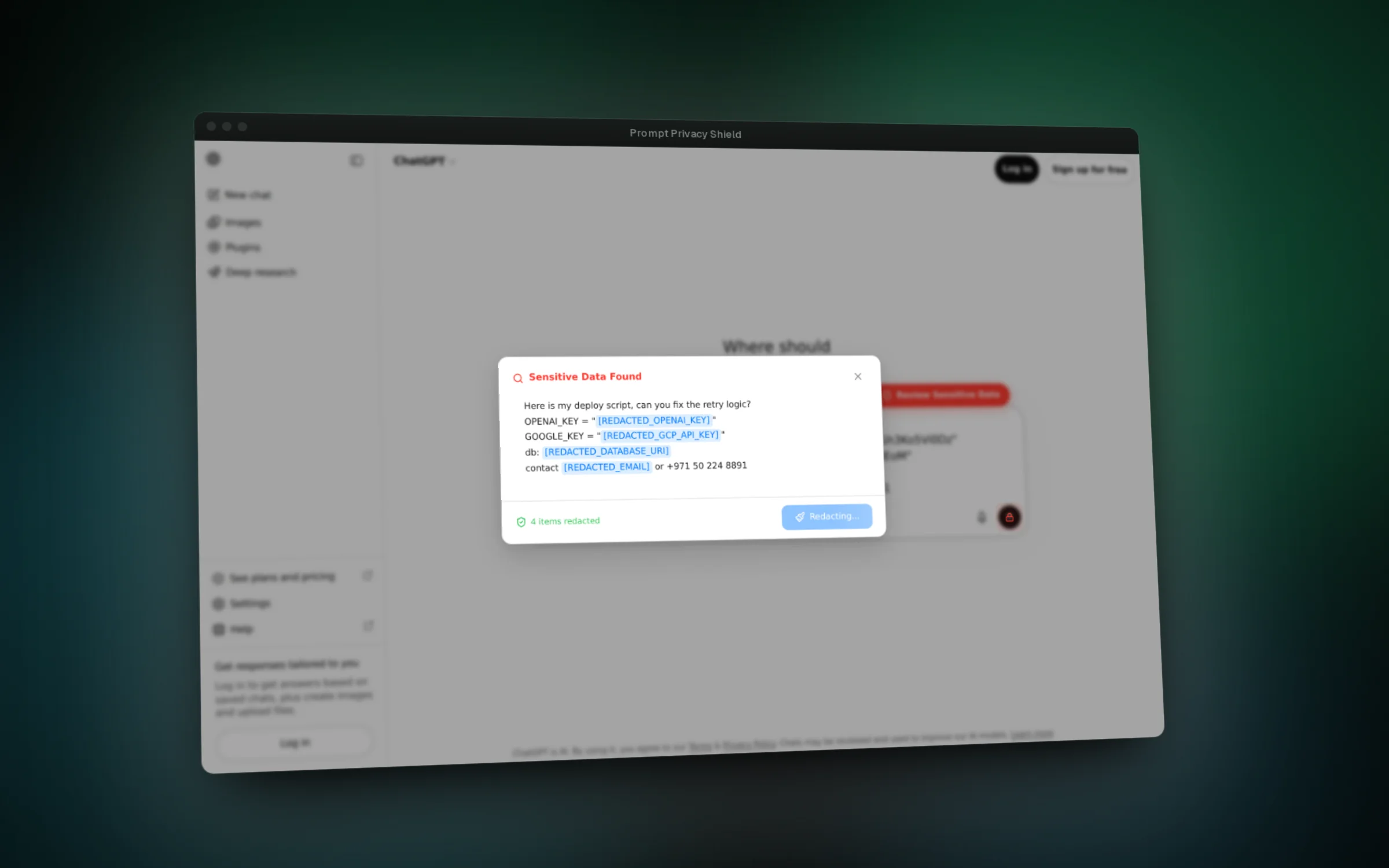
01 / 04A paste with keys in it locks the send button until you deal with them
Overview
Pasting a stack trace or a config file into a chatbot is routine, and so is pasting a live API key along with it. Once it is sent, it is in someone else's logs. This extension puts a check between the paste and the send.
The detector holds patterns for provider keys from OpenAI, Anthropic, Google, AWS, GitHub, Slack and Hugging Face, plus private key blocks, JWTs, database connection strings, emails and card numbers. Patterns are ordered most specific first and each can reject obvious placeholders, so a key written as sk-test-... is not treated as real, and overlapping matches are collapsed so one secret is reported once.
When something is found, the composer is marked, sending is blocked, and a review panel shows each finding highlighted where it sits in the text. Redacting replaces each one with a typed placeholder such as [REDACTED_OPENAI_KEY], which keeps the text readable for the model while the secret never leaves the machine.
Features
- Blocks the send button and the Enter key while unreviewed secrets are in the composer
- Detects provider API keys, private keys, JWTs, database URLs, emails and card numbers
- Shows every finding highlighted in place, grouped by what it is
- Replaces findings with typed placeholders in one click
- Takes your own watch patterns, as plain words or as regular expressions
- Runs entirely locally, with only the activeTab and storage permissions
Challenges
- Detection is regex only. It is reliable on structured secrets, which is where the real risk sits, but it will miss a credential with no recognisable shape and it does not recognise names or unusual phone formats in prose.
- A false positive is worse than annoying: it trains you to click past the warning. Each pattern can reject its own obvious placeholders, and overlapping hits are de-duplicated so the same secret is never counted twice.
- The extension has to find the composer on three sites that redesign them regularly. Attaching is retried as the page changes, and the selector list is the one place that needs updating when a site moves on.